

Clinical documentation integrity passes the payer's test
Build records that survive clinical validation review
November 20, 2026
Blog
6 minutes

TL;DR
- Clinical documentation integrity builds records whose CC and MCC diagnoses survive payer clinical validation after payment
- Capture-rate goals raise case mix index and takeback risk together, creating rework on revenue already booked
- A four-check defensibility test before final coding keeps diagnoses supported and revenue on the books
Payers take back inpatient revenue after it posts | Revenue Payers Take Back
Finance closes the month with inpatient revenue on the books. A quarter or two later, a payer's reviewer strikes a complication or comorbidity (CC) or major complication or comorbidity (MCC) the record fails to support, recouping cash finance already counted. CC and MCC capture programs book severity first and defend it later. Clinical documentation integrity reverses the order, booking only the severity a record can prove.
The cost of defending later keeps climbing. Kodiak Solutions reports hospitals on its platform lost more than $48 billion in net revenue to final denials and bad debt in 2025, up from $38.6 billion in 2024. Clinical denials drove virtually all of the rise in denial rates. For inpatient claims carrying CCs and MCCs, the riskiest moment is the payer's clinical validation review. Knowing what reviewers test shows which booked revenue will hold and which will come back.
Every CC and MCC faces a clinical validation test after billing | The Payer's Clinical Validation Test
Each secondary diagnosis carries two burdens of proof. The code has to match the physician's words. The record has to show the patient had the condition. Payers target the second burden, removing the diagnosis and moving the claim to a lower-paying diagnosis-related group (DRG).
What a payer reviewer checks in the record
The reviewer reads the chart like a clinician, looking for indicators supporting the diagnosis and treatment matching it. A note naming acute respiratory failure without blood gas results or a change in oxygen support hands the reviewer an easy downgrade.
Chasing severity raises case mix index and denial exposure together | Why Severity Chasing Backfires
Programs measured on capture rates lift case mix index (CMI) first and denial exposure second. Each added CC or MCC raises expected payment. Each one without clinical support adds a target for post-payment review, turning booked revenue into a contingent asset.
The rework cost of defending thin diagnoses
Every downgrade restarts work on an account finance already counted as collected. Physician advisors reread the chart while appeals staff build a case, often for a fraction of the original payment. This rework raises cost to collect on revenue the hospital believed it had earned.
Fewer initial denials won't close the gap. In later Kodiak benchmarking data, initial denial rates fell from 12.00% to 10.63% between the first halves of 2025 and 2026. Final denial write-offs moved only from 3.31% to 3.07% of net revenue.
Defensible documentation starts while the patient is still admitted | The Defensibility Test
The cheapest place to prove a diagnosis is while the physician still remembers the patient. In documentation, first-pass performance means the record supports every billed diagnosis before the claim drops. A strong clinical documentation integrity program builds this support during the stay, before the remittance arrives.
Concurrent review that confirms clinical indicators
Concurrent reviewers compare indicators, treatment, and the documented diagnosis while the physician can still clarify. When support is thin, a compliant clinical validation query asks the physician to add evidence or reconsider. Either answer protects the claim, since a removed diagnosis costs less than a recouped one.
CDI and coding working from one version of the record
Clinical documentation integrity (CDI) specialists and coders often define the same diagnosis differently. Targeted provider education built from real denial patterns keeps physicians on the same definitions.
The defensibility test sorts each diagnosis before the claim drops | Proving Diagnoses During the Stay
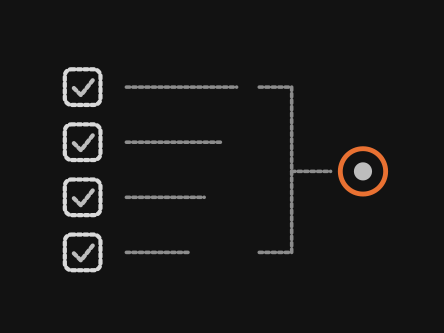
Before final coding, each CC and MCC needs to clear four checks. A diagnosis failing any one of them goes back to the physician as a query or comes off the claim.
The defensibility test for CC and MCC diagnoses
Reporting pass and fail rates by diagnosis tells finance which revenue will hold. This is clinical documentation excellence in finance terms, with open accountability for each diagnosis billed and each dollar defended.
Clinical documentation quality software flags gaps for people to resolve | Where Software Fits
Health systems already fund AI for this work. A 2025 Bain & Co. survey cited by HFMA found documentation improvement and payer compliance assurance drew AI investment from 43% of providers. About one in five apply AI to denials management.
Where physician advisors still make the call
Software flags a gap, while a clinician decides whether the patient had the condition. Physician advisors settle disputed criteria and defend the record in peer-to-peer calls. Pairing flags with clinical judgment is how DRG validation protects cash and compliance at the same time. Measured this way, clinical documentation integrity shows up as revenue that stays booked.

See which diagnoses a payer will strike first
Request a defensibility review of your highest-risk diagnoses. See which billed CCs and MCCs your records support and where clinical validation denials are likely.
Continue exploring expert perspectives, industry trends, and practical strategies for improving revenue cycle performance.
Explore Points Of ViewFrequently Asked Questions
What is clinical documentation integrity?

How is clinical documentation integrity different from clinical documentation improvement?
What is a clinical validation denial?
Which metrics show whether a clinical documentation integrity program is working?
Can clinical documentation quality software replace CDI specialists?